
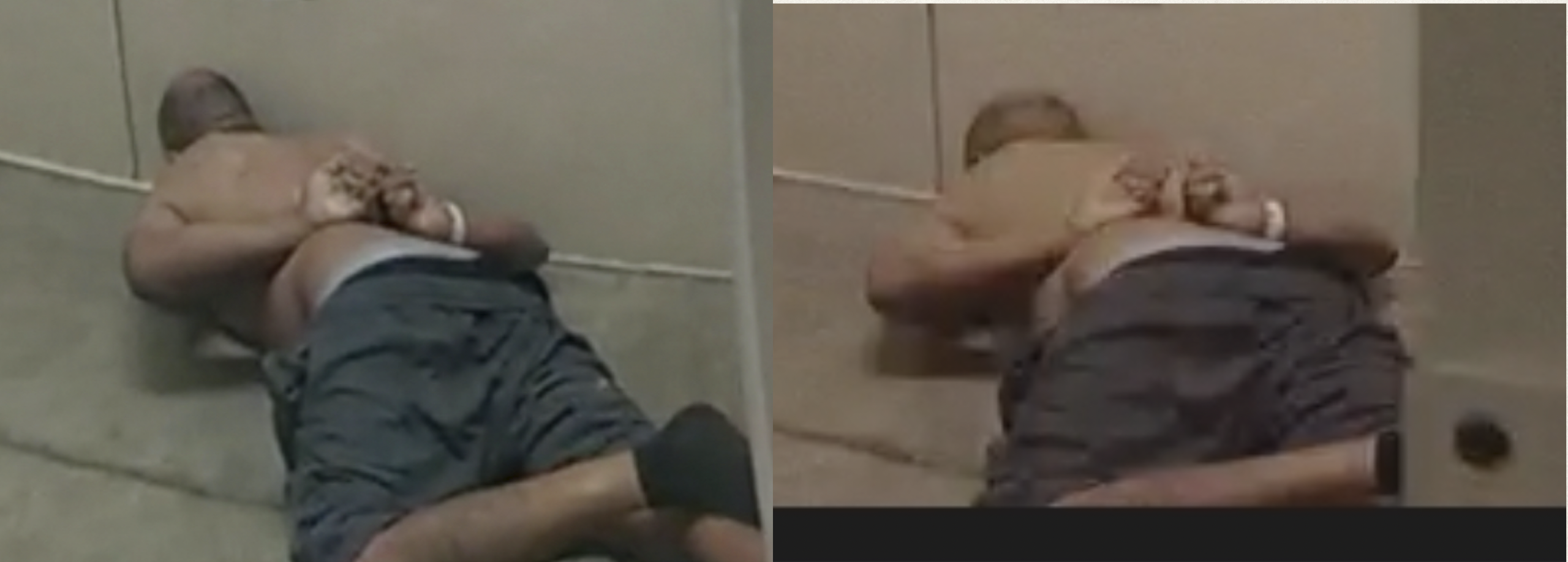
The death of 57-year-old Guadalupe Garcia while in custody at the South County Detention Center in Porterville has been ruled a homicide following the review of body camera footage by medical examiners. The incident is currently the focus of a federal wrongful death case, which claims excessive force and neglect on the part of Tulare County Sheriff deputies led to Garcia’s death.
Garcia’s estate is the main plaintiff in the case, along with Garica’s parents, Engracia Bravo Garcia and Candelario Martinez Garcia, and his sister Emma Arellano. They are represented by the Beverly Hills-based law firm Carpenter & Zuckerman. Garcia’s four children are also named in the suit.
Plaintiffs are seeking compensatory, general and special damages for economic loss, pre-death pain and suffering, and loss of companionate relationship, as well as punitive and exemplary damages against the named individual defendants.
The Tulare County Sheriff Office (TCSO) denied all allegations in a statement to the Valley Voice, stating that “the cause of death was determined to be a drug-related accidental methamphetamine overdose.”
Medical Examiner Alters Cause of Death Ruling

Garcia’s July 25, 2022 death was initially ruled as accidental, resulting from methamphetamine toxicity. However, the examiner, Dr. Sam Andrews, changed his finding following review of body camera footage captured during Garcia’s transport and confinement by sheriff deputies.
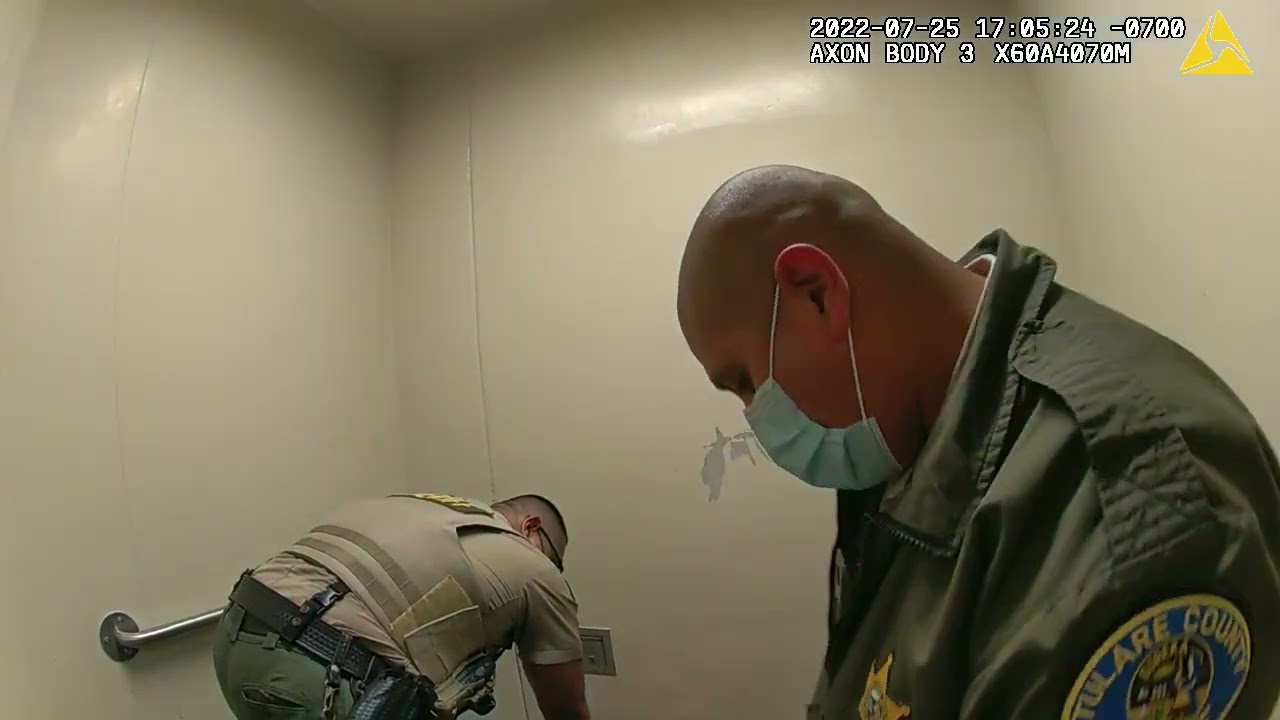
The footage shows several deputies restraining Garcia in a cell at the Porterville jail. Handcuffed and shackled, Garcia is first made to kneel against the cell’s far wall. His hands still cuffed behind him, Garcia is then made to lie with his face to the floor. The deputies then attempt to remove the restraints from the apparently unresisting prisoner.
The deputies, however, were unable to remove the handcuffs that restrained Garcia’s arms. For 4 minutes and 18 seconds was held facedown on the floor with his arms and legs restrained. Deputy Jose Renteria knelt on Garcia’s back during this time while attempting to remove the handcuffs. Garcia appears to remain motionless during this period. When the restraints were finally removed, deputies left the unmoving Garcia facedown on the floor with his head against the concrete wall.
An hour later, a medical emergency was declared by deputies. Garcia was unresponsive and had not moved from the position he’d been placed in by deputies, lying facedown with his arms still behind his back. Deputies dragged the unconscious Garcia out of his cell before beginning CPR. Medical personnel arrived soon after. Attempts to resuscitate Garcia failed.
In his review of the case, the medical examiner determined Garcia likely suffered from metabolic acidosis at the time of his arrest. This imbalance of acids and bases in the blood can result in the symptoms Garcia displayed at the time of his arrest, including mental confusion, excessive sweating and elevated heart rate.
Documents in the case brought against the county by Garcia’s surviving family claim deputies were aware of Garcia’s altered mental state when he arrived at the detention facility. Arrest records report that Garcia “allegedly did not respond appropriately to questions, that his overall appearance looked ‘disheveled and unkept,’ and that Guadalupe Garcia was quoting scriptures from the Christian New Testament,” court records state.
Cause of Death Changed Following Body Cam Review
An initial autopsy of Garcia was performed by a physician from NAAG Forensic, a nationwide forensic pathology firm formerly contracted by the TCSO to perform postmortem investigations. The firm’s contract with the TCSO has since ended.
The medical examiner initially ruled Garcia’s death accidental, caused by methamphetamine overdose. However, the TCSO did not initially provide body camera footage of Garcia’s detention or the subsequent attempt to revive him. Last month, the medical examiner provided a new opinion: Garcia’s death was homicide.
An amended opinion from NAAG on Garcia’s death issued on September 29, cited “inconsistent pressure (that) was applied to the upper lateral left back and lower back areas” while deputies removed Garcia’s restraints. “Garcia remained prone throughout an interval of approximately five minutes,” the opinion noted.
Because of the “prolonged prone positioning” and the “likely” metabolic acidosis, the medical examiner said Garcia’s death should be listed as a homicide. “Prone restraint cardiac arrest complicating the toxic effects of methamphetamine and atherosclerotic coronary artery disease” is cited as the cause.
NAAG has issued a recommendation to the TCSO – which also serves as the county coroner – to amend Garcia’s death certificate.
TCSO Denies Responsibility
Despite NAAG’s amended finding of homicide, the TCSO maintains the conclusion of Garcia’s incomplete and unamended autopsy is still correct.
“Following his death, a full investigation was conducted, and the cause of death was determined to be a drug-related accidental methamphetamine overdose,” the TCSO said in a statement to the Valley Voice.
According to the TCSO’s version of events, Garcia was arrested by the Porterville police for suspicion of “driving under the influence of drugs, obstruction and resisting arrest of an officer.”
Lawyers for Garcia’s family, however, state that Garcia cooperated with officers, who took him to Sierra View Medical Center for evaluation. The lawsuit also states deputies, not Porterville police, arrested and transported Garcia.
The TCSO statement agrees Garcia was taken to Sierra View for “medical clearance,” which was given. Garcia was later transported to the South County Detention Center (SCDC). However, while at Sierra View, Garcia stopped responding to questions and refused further medical testing. This prompted officers to seek a court order to force Garcia to comply, which was granted.
The lawsuit against TCSO states that when officers attempted to place Garcia back in handcuffs at the hospital, a fight ensued. Four police officers and a hospital guard were required to restrain Garcia, who was tased repeatedly. Garcia was treated for these injuries and taken to the SCDC.
Garcia was allegedly injured again while being transported to the SCDC, according to court documents. Jail personnel documented new injuries to Garcia’s left cheek and below his left eye that were not recorded by staff at Sierra View, the lawsuit alleges.
Garcia was arrested at 2:40 p.m., and was taken to SCDC at 5:10 p.m. Minutes later, he was taken to a cell, where deputies placed him facedown on the floor. For an hour after deputies left his cell, Garcia did not move. Surveillance footage shows officers and other jail personnel “repeatedly observing Garcia lying motionless in his cell during this hour” but did not check his health, the suit said
The TCSO denies this version of events:
“The Tulare County Sheriff’s Department strongly disagrees with the statements provided earlier, including the inaccurate portrayal of the events leading up to (Garcia’s) unfortunate death, including any perceived lack of response by dedicated Sheriff’s personnel. We take every injury or death in our custody very seriously, and this loss of life is tragic.”
Prime defendants in the federal lawsuit are Tulare County, the TCSO, Sheriff Mike Boudreaux and Lt. Megan Pinheiro. Other defendants in the suit include Deputy Jose Renteria, Sergeant Orlando Davalos, Deputy Roger Wenzinger, Deputy Sal Hinojos and Detective Humberto Santoyo.