
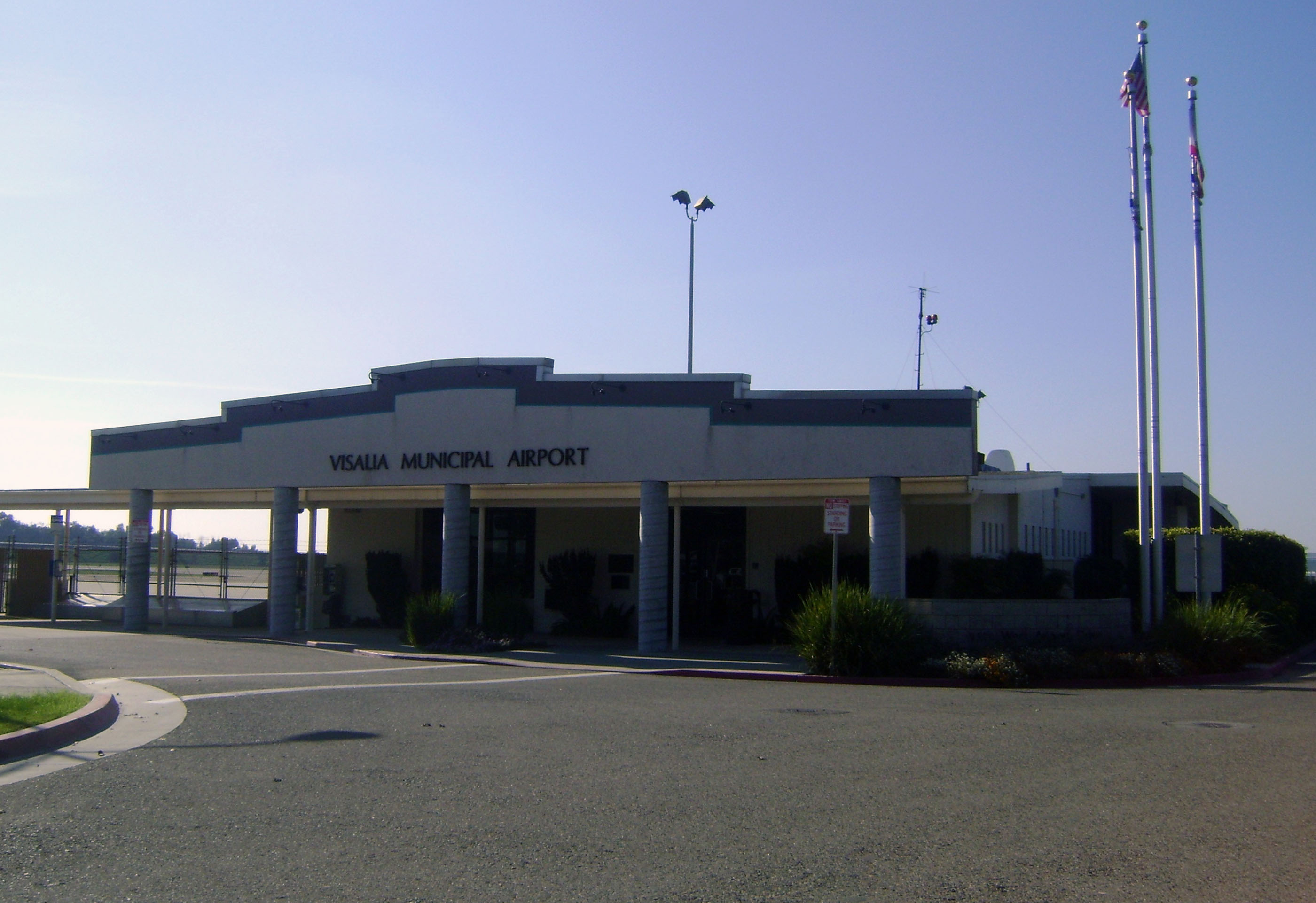
Commercial air travel could return to the Visalia Municipal Airport after a long 10 years without passenger service. A final decision is still pending, however, and it lies in the hands of the US Department of Transportation (USDOT).
Passenger Flights or Cash?
After the relationship with the last company to carry passengers to Visalia, SeaPort Airlines, ended poorly, the city opted out of subsidized passenger flights at the Visalia Municipal Airport.
Instead, it decided to take a chunk of federal funding to improve and upgrade the airport’s infrastructure.
It has this option thanks to the USDOT’s Essential Air Service (EAS) program, which subsidizes airlines to serve rural or isolated communities. It does this by paying for subsidized air travel or grants for capital improvements. But not both.
“In exchange for $3.7 million, which was a portion of the funding for the subsidy for the EAS program, we signed away 10 years of service,” said Visalia Municipal Airport manager Jody Miller. “We used those funds on airport development, the hangars and stuff. Hangar development, plus kind of general improvements throughout the airfield.”
The decade the city signed away ends on May 1, 2027.
“That 10 years went fast,” Miller said.
With a bigger population of Visalians and a well-maintained airport, the city is considering bringing commercial airlines back. But the USDOT has the final say. It will issue a request for proposals (RFP) late this month or in early November to seek interested passenger carriers, Miller said.
If the city decides to bring air service back, and the candidates who respond to the RFP are worth working with, then the city will send its recommendation to the USDOT; the feds will ultimately pick Visalia’s newest airline.
Miller emphasized that the city won’t have the final say, but its opinion will be taken into serious consideration.
“Ultimately, it is their decision,” he said. “They’ll take our thoughts and everything into account, but at the end of the day, the US Department of Transportation will select the provider, should we as a community decide to go that route.”
Five Airlines Want to Serve Visalia
The city decided to end passenger service at the airport following a less-than-satisfying experience with prior carriers that served the city.
The city and its last airline, SeaPort Airlines, parted ways in 2016; the company ended operations later that year.
The airline before it, Great Lakes Airlines, left Visalia in 2014 after city and federal officials picked SeaPort. City officials cited Great Lakes’ poor service and reliability. Great Lakes later ended operations in 2018.
A shaky business model was only part of the problem, said assistant city manager John Lollis, who wasn’t working at City Hall when the company and city parted ways.
“Great Lakes had terrible service, (and) had asked to be released from its contract. The city asked the DOT to do that,” he said. “The ‘easy button’ came with this new program, which was saying, ‘We’re going to allow up to 10 airports to take an option to go into this grant program.’”
Only 182 airports across the United States are eligible for EAS subsidies, with a significant concentration in Alaska. In California, four airports are eligible: Visalia, Merced, Imperial/El Centro, and Crescent City.
Visalia became the first EAS community nationwide to give up passenger service under the USDOT’s Community Flexibility Pilot Program. Giving up passenger service seemed like the best option in 2016, Lollis said.
“There was frustration and uncertainty with another new provider who hadn’t been here before,” he said. “And then you had the grant opportunity waiting. It was the best decision at the time given that there was just so much uncertainty.”
If it picked another unreliable airline, the city also faced losing its EAS benefits permanently. Federal regulations at the time required an effective airline subsidy of $200 per person or less. City officials were unsure that any airline could generate the passenger traffic required to do that.
Now, the EAS rules have changed, and the maximum subsidy an airline can be paid per passenger in Visalia is $850 in 2027, coming down from $1,000 currently. The USDOT can issue waivers from this policy if required, but there are new restrictions on participation: airports can receive no more than two consecutive waivers in a row, and no more than 10 waivers every 25 years.
In 2026 there’s a lot of renewed interest to service Visalia’s air travel needs.
So far, five airlines have expressed interest in coming to Visalia, according to Miller’s presentation.
All the candidate companies are small carriers hoping to expand: Surf Air, Advanced Air, Boutique Air, Contour Airlines and Flight Level Aviation, which is Fresno-based. Miller said the airlines all understand what the city and the feds expect.
“These are the ones that we have already spoken to,” Miller said. “They reached out to us. Aviation’s a small community. They know what’s going on. They said they’d throw their hat in the ring.”
Any carrier picked to serve Visalia through the EAS program will have to provide a minimum of at least a dozen flights to and from the city. The number of flights could be higher depending on demand.
Miller described the airplanes owned by the five candidate carriers as luxurious.
“I’ve flown for work all sorts of times, and I’ve never seen regional commuter airlines that are this nice,” he said. “You’re getting the charter experience at a commuter airline price.”
Surf Air, Advanced Air, Boutique Air, and Flight Level Aviation would operate nine-seat turboprop aircraft seating nine passengers. Contour Airlines operates 30-seat jet aircraft.
The proposed fares range from $100 to $250 for one-way service. And at least one of the carriers, Boutique Air, has suggested it might build a maintenance center in Visalia as it reestablishes itself on the West Coast.
“With any of the companies, that’s going to be a potential option,” Miller said. “They would establish a presence on the field, create jobs.”
There’s another benefit to the city, one possibly worth millions of dollars in saving on future federally-funded aviation projects. If Visalia Municipal Airport returns to providing passenger service and maintains good standing during the first full year of the program in 2028, then the available USDOT funding would go from 90% to 95%. Currently, Visalia and state funding contribute 5% each in matching funds to receive this federal money. Visalia’s fund-matching requirement would drop to 2.5% after 2028.
Adding passenger service also won’t deter large cargo carriers – like Amazon and FedEx – from building a large presence at Visalia’s airport.
“If anything, it would improve our chances with that,” Miller said. “As the industrial park, as the other things expand, these companies want to have an easy way to get in and out of Visalia. Once that’s there, they’re (cargo carriers) more likely to expand their operations.”
City Will Have 30 Days to Decide
The USDOT RFP should go out within the next 30 days. The list of qualified proposals it receives will then be presented to the city council for its consideration.
“At that point we could present it to (the city) council, we could have open houses at the airport,” Miller said. “We can do different things and get those presentations out there to the community. Where they (citizens) want to go is ultimately going to let us decide who the best partner is for the program.”
Following the period of community input, and with input by an ad hoc airport committee, the council would then present the USDOT with a letter stating local preference. The ad hoc airport committee will include two members of the city council, as well as other city leaders.
Any airline seeking USDOT approval for the EAS program must have a history of reliability of service, agreements with large air carriers (known as interline agreements), city and community preference, a good community marketing plan and a reasonable total proposed compensation.
The USDOT list of qualified respondents could be available as early as December. The city’s outreach should begin shortly after the list is published.
“I’m excited for it to come back,” said council member Brian Poochigian. “Sometimes it is hard to get to connecting airports. I think this will make it a lot more convenient for our residents.”