
College of the Sequ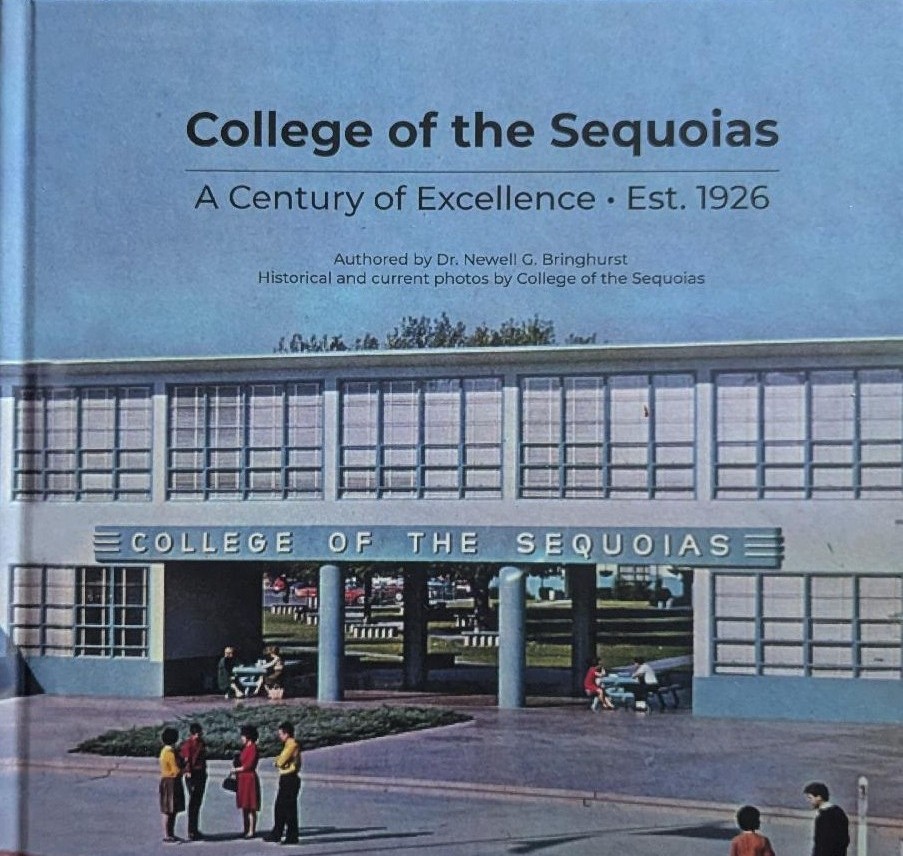 oias turns 100 this fall, and a just-published book by retired history professor Dr. Newell Bringhurst tells the story of its long history.
Bringhurst will tell some of these stories from the book and sign copies during the Downtown First Friday Art Walk at the Brandon-Mitchell Gallery, 117 S. Locust, Visalia, at 6 p.m. on Aug. 7.
In September 2026, Visalia Junior College opened its doors to 63 incoming freshman on the Visalia High School campus (now Redwood). High school teachers taught the classes, and college life was much like high school. Bells announced the beginning and ending of classes, and students were given tardy slips if they were late.
The student body adopted the “Tartars” as their school mascot. Sports teams were quickly created along with music and theater programs.
Important in starting the college were two men whose names are now inscribed on Redwood’s auditorium: the L.J. Williams Theatre in the DeWitt Montgomery Auditorium.
But the high school campus was crowded, and Visalia Schools Superintendent Montgomery promised the college its own campus. High School and College Principal Williams found a remote 55-acre plot of land “far out in the country” on the Visalia-Tulare Highway (now Mooney Blvd.) He came under fire for selecting such a “large site so far outside of town.”
In September 1940 the new campus opened, with an administration/classroom building, gym and two industrial arts buildings designed in the “ultra-modern” Art Deco style.
In 1949, the student body chose a new name. Mineral King, Mount Whitney, Kaweah and Sequoia were considered. Students also chose a new mascot, the Giants, which represented the huge redwood trees in Sequoia National Park and the new college name, College of the Sequoias.
That year, Ivan Crookshanks, principal of Visalia High School, was chosen first president/superintendent/of the college, a job he held for a record 35 years.
The book goes on to record the turbulent 60s, unsettling changes in leadership, the addition of campuses in Hanford and Tulare, and many historic photos.
Bringhurst was a long-time history instructor at the college and has written many books, most about Mormonism. He also wrote “Visalia’s Fabulous Fox” about the history of the Visalia Fox Theatre, published when the theater was restored and reopened in 1999.
Those attending the talk can also view the art show on display by the Kings County Art League.
For more information, call the gallery, which is located in the Center for Spiritual Living, 559 625-2441 or go to www.brandonmitchellgallery.com/gallery