
In less than two weeks, Tulare will complete its $12.5 million project to shelter the city’s unhoused population — surpassing the Navigation Center in Visalia in both price and scale. The Tulare Cares Emergency Shelter, located at 530 East O’Neal Ave., has the potential to hold 400 guests and is roughly 25,000 square feet, with essential amenities and support services.
According to Assistant City Manager Thomas Gaffery, the shelter will cost the city about $7.3 million, while the remainder of the costs are covered through a combination of county, state, and federal sources. The shelter held its ribbon-cutting ceremony on July 10, 2026, though guests aren’t expected to move in until the tentative opening date of July 27, 2026.
“Tulare First”
 During the ribbon cutting on July 10, City Manager Marc Mondell made it clear that the new emergency shelter will be following a “Tulare First” policy. In other words, the shelter will only be serving unhoused people that have ties to the city of Tulare.
To ensure this policy is followed, all potential guests go through a screening process in collaboration with Tulare PD’s Halo Team specialty unit. This partnership helps the shelter verify a person’s ties to the city of Tulare through the acquisition of personal information such as last known addresses, background checks, and other forms of documentation.
The shelter’s first guests will be those living at Tulare’s temporary homeless encampment that opened in 2023.
The encampment made up of city provided tents has been a marker of growing concern for some Tulare residents, who cite issues with sanitation, safety, and the prolonged presence of an encampment that was never designed to last for multiple years.
Former Tulare Mayor Terry Sayre cited construction delays as the reason for the wait, but assured the encampment will no longer exist after the tentative move-in day on July 27.
“It will be dismantled,” Sayre said. “Our goal is to get them permanently housed.”
The unhoused population at the encampment is aware of this upcoming change and has been given the opportunity to tour the new shelter as part of the transition process.
Tulare Cares Project Manager Brittney Dias stated that although the new shelter can accommodate up to 400 people if needed, current capacity stands at 200, with only 97 guests initially moving in from the encampment and an additional 50 beds reserved for referrals through the Kings View nonprofit organization.
Kings View is a behavioral health organization that provides mental health, substance abuse treatment, and social services.
Prospective guests unable to verify ties to the city of Tulare will be referred to other organizations such as Kings View, the Lighthouse, The Visalia Navigation Center, the Good Samaritan, and Salt & Light.
Three Phase Model
Tulare’s emergency shelter takes a novel approach in design and function built around a three-phase model intended to transition unhoused off the streets and into permanent housing.
According to Renee Soto, Tulare Cares Homeless Shelter Board Chair, the three-phase model arose from discussions among city council members. The model was designed with the intention of preparing guests for permanent housing by giving them tools to mitigate the chance of relapse or a return to homelessness.
“Ultimately the goal is to be housed,” Soto said. “But housed with the tools they need to succeed when they are housed.”
At the center of the Tulare Cares three-phase model is the main shelter structure that resembles an airplane hangar with tall ceilings, air conditioning, and industrial ventilation. The majority of the guests will be living here.
The structure is divided into three large sections, each distinct from the others in bed count, privacy level, and amenities. Together, they form a progression system designed to advance guests toward the goal of finding and keeping permanent housing.
Phase A: Entry
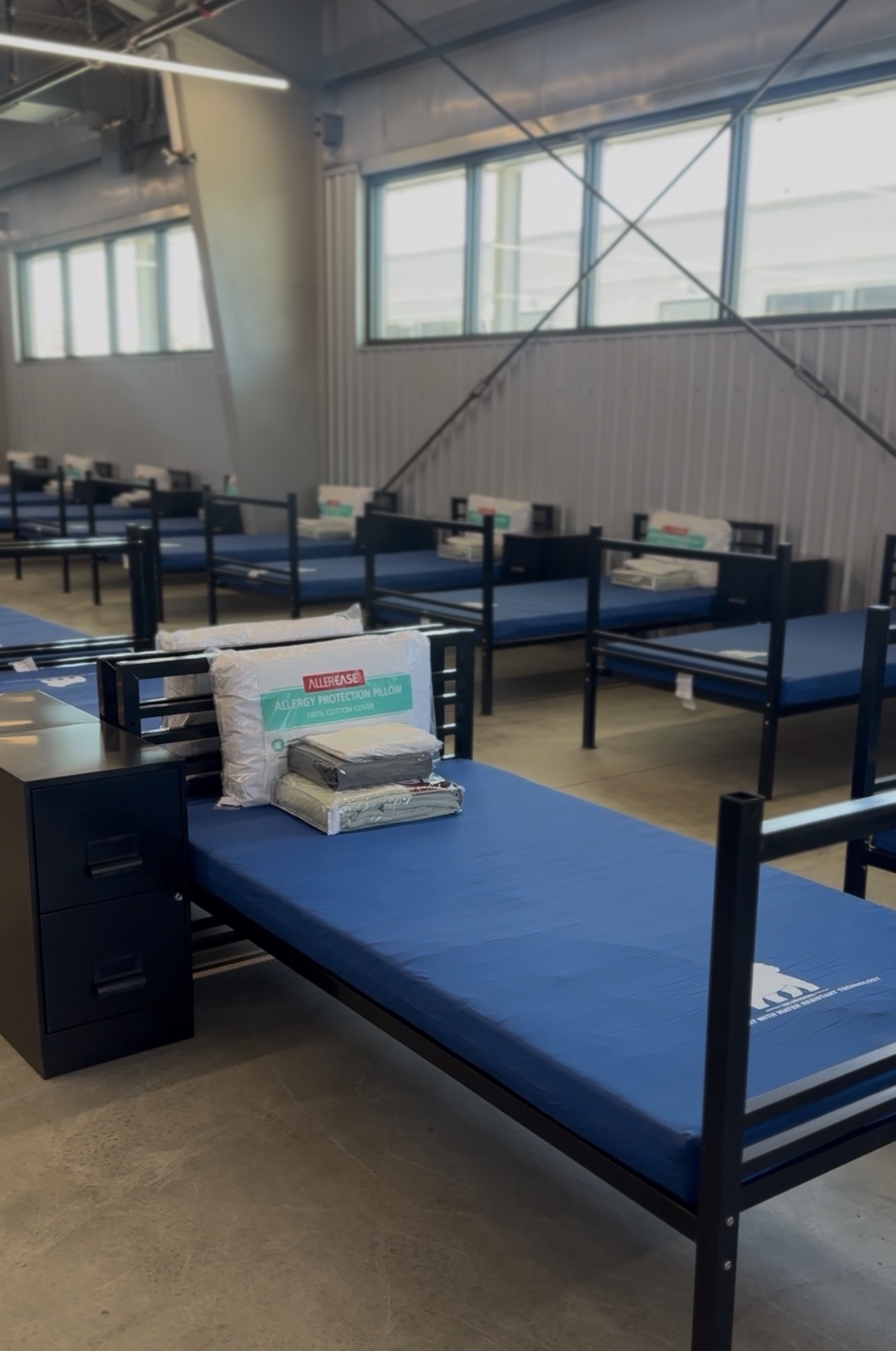
The first phase of the model is a large, barracks-style dormitory with approximately 87 beds. This section of the shelter structure is split in half — women on one side, men on the other with access to secure storage. Privacy is minimal while staff assess for individual needs or behavioral concerns.
During this phase, guests begin acclimating to a more structured environment, are connected with a navigator, and start the process of obtaining any missing documentation, such as a birth certificate, ID, or Social Security card. According to Tulare Cares Operations Manager, Brittney Dias, acquiring this documentation can take up to a month.
“You’re just getting started. That’s gonna be your phase A,” Dias said. “We’re gonna try to get you familiar with structure and familiar with starting to take responsibility for your own actions.”
Phase B: Participation
After guests have acclimated to the structure and made progress in case management, they are given the opportunity to progress into B phase and move into the next section of the shelter structure. This phase holds 64 beds, with partitions providing semi-private living conditions. Along with more privacy, guests are also given opportunities to take on responsibilities through volunteering on the shelter grounds.
At this stage, staff can work with guests to help them find part-time or full-time paid work. Guests can also take classes on subjects such as art or managing bills, or attend AA/NA meetings and can earn what the facility calls “Care Bucks” — a form of on-site currency that can be used to purchase items such as clothes, laundry soap, dog food, blankets and hygiene products. The currency system is designed as an incentive to further acclimate guests to increased structure and responsibility.
Phase C: Recovery
The final phase of the model involves guests moving into the last section of the shelter, which contains 24 private rooms with two beds per room. This phase houses guests who are document-ready and either volunteering or earning income while they await a housing opportunity outside the facility. During this phase, guests continue to meet with case management and work with navigators. It is the final stop in the Tulare Cares three-phase model before guests ultimately leave the facility for permanent housing.
Most guests prefer to be in the private rooms. However, Dias emphasized that this phase of the model is only a temporary stop designed to help guests adjust to being in a home structure before they find a unit of their own outside of the facility.
“We’re trying to get [guests] familiar with being in a home structure, so that when you get into your own unit that you don’t get overwhelmed and feel like you’re on your own.”
The Rest of the Campus
The shelter structure is the heart of the facility where the majority of the living and work will be done. However, there are more than two dozen other buildings at the facility, serving a variety of functions meant to support guests while they progress through the phases.
North of the shelter structure is a collection of 16 modular two-room units. Each of these units has two beds per room and has a total of 32 rooms, adding an additional 64 beds to the shelter. Among these units are also spaces designed to accommodate guests with disabilities or limited mobility. More notably, these units are capable of combining with an adjacent unit to form a suite, an ideal living arrangement for guests with families or children.
“Families are different from individuals,” Soto said. “So we will be implementing a program specifically for them.”
South of the shelter structure is the second largest building at the facility where the classroom and laundromat are located. This is also the building where the food pantry is located, and where guests receive two meals per day. Dias said the number was intentional — receiving more than two meals would disqualify guests from continuing to receive food stamp assistance.
Another structure southeast of the facility is a small shipping container dubbed “The Hot Room”. According to staff, it acts as a staging area for guests’ belongings when they first enter the emergency shelter. The hot room takes advantage of the Central Valley heat and reaches temperatures upwards of 120 degrees fahrenheit and serves as a natural sanitization space that kills pests like bed bugs.
Other notable buildings and accommodations around the facility include a large space for dog kennels, a garden area, a small basketball court, a large shipping container with extra clothes, an office space for staff, and four modular buildings with multiple restrooms and showers.
It Takes a Village
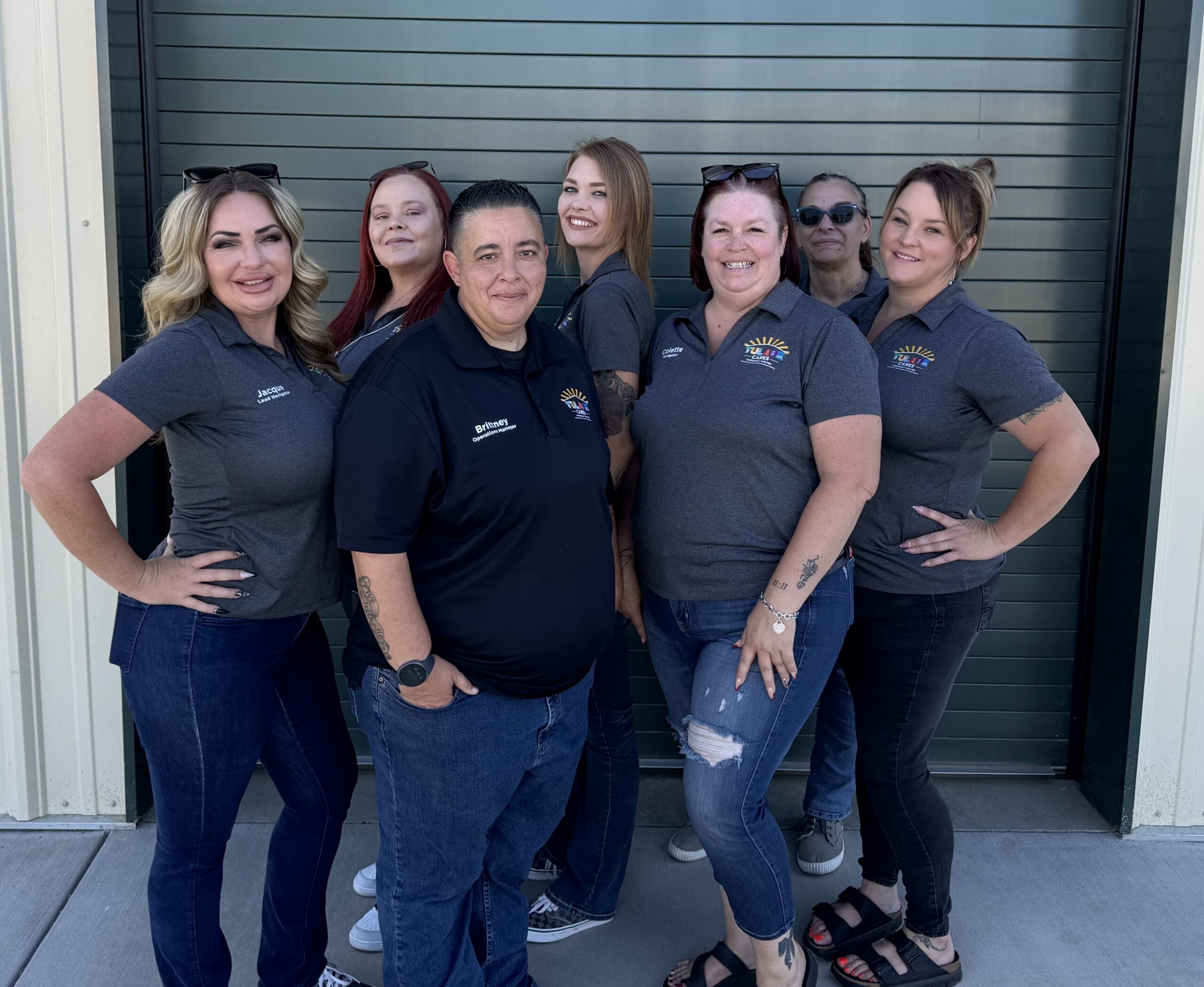
A facility the size of Tulare Cares would not be operational without a robust team of dedicated staff working to keep it running. According to Dias, the emergency shelter will be fully staffed 24/7 seven days a week and will have security around the clock.
A total of 22 staff members will be serving guests at the shelter. The team consists of staff leads, admin, a food coordinator, and twelve part-time staff, most of whom were previously unhoused. The facility will also have a team of volunteers to help support daily operations.
One of the key roles is a team of four navigators hired to facilitate case management. Navigators will assist guests with individualized needs such as documentation, application support, networking, health benefits, and permanent housing placement.
“They will be right next to you the whole time working you through the systems,” Soto said.
Many of the staff operating the shelter were previously unhoused at the encampment two blocks away and have been provided positions through the Lighthouse Rescue Mission.
“Over the last couple of years, the individuals in the encampment who have stepped up to volunteer and worked with [Dias] rose to the top by nature and started serving and volunteering today,” Soto said.
One of these individuals is Mauricio Ramirez, a full-time lead for Tulare Cares. Ramirez was homeless for three years in Tulare and began his journey toward stability while volunteering at the encampment. He said leadership saw potential in him and gave him growing responsibilities over the years, which has culminated in full-time work at the new emergency shelter.
“It’s been a blessing,” Ramirez explained. “Rarely do you get this kind of opportunity.”
The journey that Ramirez has taken to achieve stability and permanent housing is a testament to the years of outreach, support, and relationship building done by the city and nonprofit organizations.
“That’s the story of Tulare Cares,” Soto explained. “No one is new to this. In the last 20 years it’s been a coming together of the homeless community and the city.”