

This article continues to look at the race for seats on the College of the Sequoias Board of Trustees. The Valley Voicepreviously spoke with candidates for Ward 5, which includes Hanford.
Four candidates have entered the race for the Ward 1 and Ward 2 seats on the College of the Sequoias’ Board of Trustees. Ward 1 candidates are incumbent Bob Aguilar and challenger Louis Lyons. Ward 2 candidates are incumbent Ken Nunes and challenger Kristina Roper.
On Nov. 3, Visalia, Tulare and Three Rivers voters will decide who represents them on the five-member College of the Sequoias Board of Trustees. The election arrives as College of the Sequoias marks its 100th year with a $50 million University Center under construction.
Meet COS Ward 1 Candidates
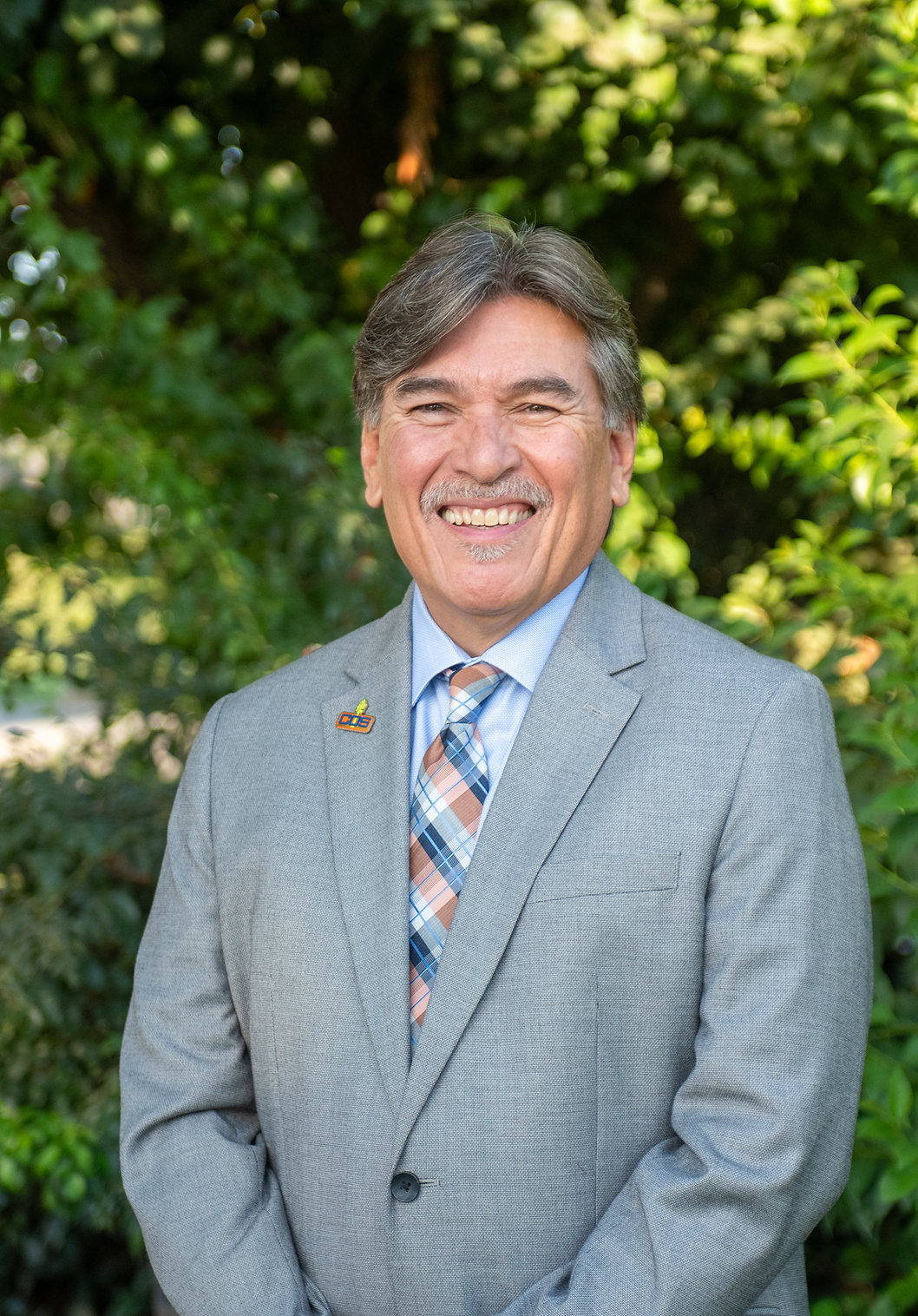
Incumbent, Bob Aguilar, was appointed to Ward 1 after Greg Sherman vacated his seat in March 2026. Although Aguilar has only been on the board for six months, he has nearly two decades of experience in education and more than 30 years of legal experience.
Aguilar is a COS and UCLA alumnus. He received a Juris Doctor from the University of the Pacific, McGeorge School of Law, and has served as an elementary teacher, high school teacher, assistant principal and principal within the Visalia Unified School District. He has served on various boards, including the Kaweah Delta Hospital Foundation, Ag Advisory Board, Redwood Law and Justice Academy Board and the COS Giant Foundation. Aguilar has also served as a basketball coach for Mt. Whitney High School. He emphasized the influence his late father, Robert Aguilar, has had on him and the resulting three generations of educators in his family.
“It was tied to what we learned as a family through my father and serving, particularly in the educational arena,” Aguilar said. “My daughter’s an educator… This is kind of what we say as Aguilars: this is what we do.”
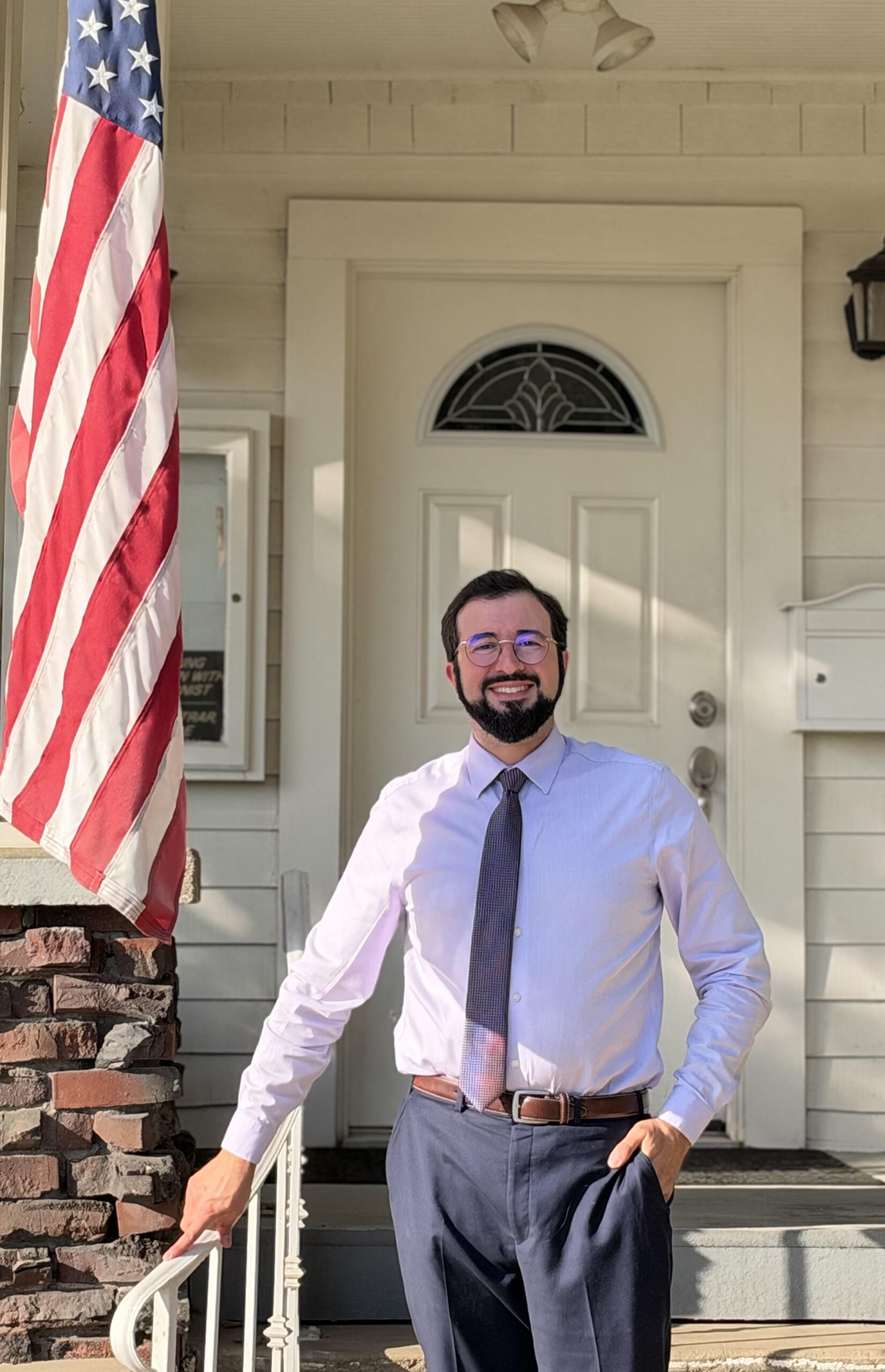
Louis Lyons is the challenger for Ward 1. Like Aguilar, he is running for the board for the first time. He is a Redwood High School and Fresno State alumnus. He received his law degree from the University of Oregon School of Law and then returned to Visalia, where he has spent the last 15 years at his family’s law practice with a focus on bankruptcy and family law. He is currently the president of his son’s elementary school Parent-Teacher Association, a chairperson for the school’s School Site Council and the board secretary for the Central California Bankruptcy Association.
“College of the Sequoias is the crown jewel of our community, where so many of my friends and neighbors have gone to receive their advanced degrees, vocational training and professional development, and I want to make sure it remains a quality institution of higher education that is affordable for our students,” Lyons wrote.
Ward 1: Why Are They Running?
As a COS alumnus, Aguilar credits COS with jump-starting his postsecondary education. He is a strong believer that education creates opportunities to build a stronger future. He is running to continue his family’s legacy of service and sees the election as an opportunity to “get back in the game” after retiring from education in June 2024.
“I am running for the Ward 1 seat because I believe furthering your education creates more opportunities to build a stronger future. I am a firm believer in public education as I am proof of what it can do for a successful career,” Aguilar wrote.
Lyons, although not a COS alumnus, considers himself a proud product of the Visalia education system. As an attorney, he acts in a fiduciary capacity, safeguarding his clients’ property. He said he would do the same for taxpayers at COS. Lyons is running to give back to his community and preserve the institution as Visalia’s “crown jewel” through three core beliefs.
“(1) the public and students need to know their voices are being heard by the Board; (2) making sure students’ needs are being met, from greater parking availability, to childcare availability to class availability; (3) making sure that all employees are respected and listened to,” Lyons wrote.
Ward 1: Undocumented Students and Flock Cameras
With ICE recently launching a California immigration crackdown, and the presence of ICE being reported in Fresno, including an ICE agent assaulting residents, questions and concerns have been raised about the safety of undocumented students. Some COS faculty have even taken the initiative of helping undocumented students make it to their classes every morning by facilitating a carpooling system. Ward 1 candidates were asked how they would support undocumented students if elected this November.
Aguilar prioritized student safety in his answer, but added the caveat that the institution must remain in compliance with the law. He referenced an incident that occurred at a courthouse while he was working as a defense attorney. According to Aguilar, an ICE agent detained one of his clients while Aguilar was in the middle of speaking with him about his case. Aguilar explained he could not get involved, because he could be arrested for interfering with an officer’s duties.
“So there’s a fine line that you have to be mindful of in how you approach this very delicate, very sensitive issue,” he said.
Lyons’ response on the topic of undocumented students leaned more into the issue of surveillance and affording all students what he called “equal dignity.”
“I just want all students to feel that they are welcome at COS and that they’re not about to be excised from society,” he explained.
While on the topic of surveillance, Lyons made it clear that he is not a fan of the automated license plate readers on the COS campus. His main concern is that COS campus officers are not the only ones with access to the data collected by private companies like Flock.
“This is information that is available to other parties unknown, which is a concern to me, because we don’t just have adult employees and students. We have minors on our campus who are being observed by these cameras, to whom third parties have incredible degrees of access,” Lyons explained.
It’s worth noting that Lyons is not anti-security. He acknowledges the utility of technology as a layer of security.
“I understand that these cameras are incredible tools in the hands of our good law enforcement officers at COS, but I see little reason why we could not simply depend on old-fashioned CCTV cameras instead, that are monitored by our bonded peace officers who are able to respond to criminal activity on the campus,” he said.
Asked about his stance on the Flock cameras on campus, Aguilar deferred to the law and questioned whether there is an expectation of privacy in a public space. For context, the current Flock cameras on campus are aimed at the college’s public parking lots.
“I don’t think there is an expectation of privacy in a public parking lot,” Aguilar said.
Aguilar added that privacy concerns on campus need to be listed and weighed against the law before a decision is made.
“And then it lands where it lands,” he continued. “Is everyone going to be in agreement? Probably not, right?”
Ward 1: Health Care for Part-Time Faculty
Ward 1 candidates differed on whether COS should participate in a state program that reimburses districts for the cost of part-time faculty health insurance.
Aguilar held some reservations when it came to part-time employees getting full-time benefits. He cited his own experience as a business owner and emphasized the cost of providing health care. However, Aguilar said he was open to learning more about the program before taking a stance on the issue.
“As a business owner it was difficult to offer it because of the cost and expense tied to it,” Aguilar said. “…For me I want to know more about the state program and the costs and benefits of that program. So for me to say no or yes, I don’t think it’s fair until I learn more.”
Lyons didn’t share Aguilar’s hesitancy and made his stance clear.
“I think as long as this program exists, I would seek to provide health insurance for our part-time faculty members,” he said.
Lyons believes providing health care to part-time faculty would ensure that COS remains competitive with other institutions that participate in the program. He explained that some part-time faculty may face the decision of staying at COS without health insurance or applying for a position at another institution that provides it. Ultimately, Lyons believes health care is a basic need that must be met by the college.
“Their basic needs, I believe, have to be met. The most basic needs, obviously, being their families’ health care,” he said.
Ward 1: COS Childcare Center and Other Facilities
The possibility of returning on-site childcare to COS has been a topic of discussion among students, faculty and leadership. Both candidates acknowledged that childcare is a legitimate concern for student parents.
Aguilar said he is aware that a childcare center existed at one point at COS, and that his understanding was that it was discontinued and replaced by other forms of childcare support because that was more of an “economic match” with student demand at the time. With that being said, Aguilar said he is open to the process and that it needs to be an informed decision that balances the college’s finances with student demand.
“If the college can meet that demand in some way, then you obviously want to do it,” Aguilar said. “But then you also have to look at it from the perspective of — there’s only so much financing a college has. And so you have to balance and reconcile the demand versus what you have in the funding source to reach the best outcome.”
Lyons’ response also referenced the college’s previous on-site childcare, but his understanding of why the center closed differed from Aguilar’s. According to Lyons, the childcare center was closed due to a mold issue.
The Voice confirmed Lyons’ claim that the COS childcare center was indeed closed because of a mold issue. In fact, a 2011 ABC7 article has Brent Calvin, now COS superintendent/president, on record stating the college did not have the money to get rid of the mold in the daycare. The same article reported that COS had a $2 million deficit at the time, suggesting Aguilar was partially correct about finances playing a role in the permanent closure.
Lyons said COS should look at bringing back the childcare center to help relieve both students and faculty of the cost of childcare, a cost he says has “exploded” over the past decade.
“A lot of young parents do not have access to childcare, and/or if they do, it’s particularly inconvenient. And one of the great things that COS used to provide was an on-campus child development facility where students could drop off their children, attend classes, and then just come and pick them up after they were done. And it was also utilized by faculty members as well,” he said.
A new childcare facility isn’t the only construction Lyons believes should be considered. He also said the college should consider adding a multilevel parking structure to address parking congestion at the Visalia campus. He added that once the new University Center is complete, parking congestion will only get worse.
Meet the COS Ward 2 Candidates
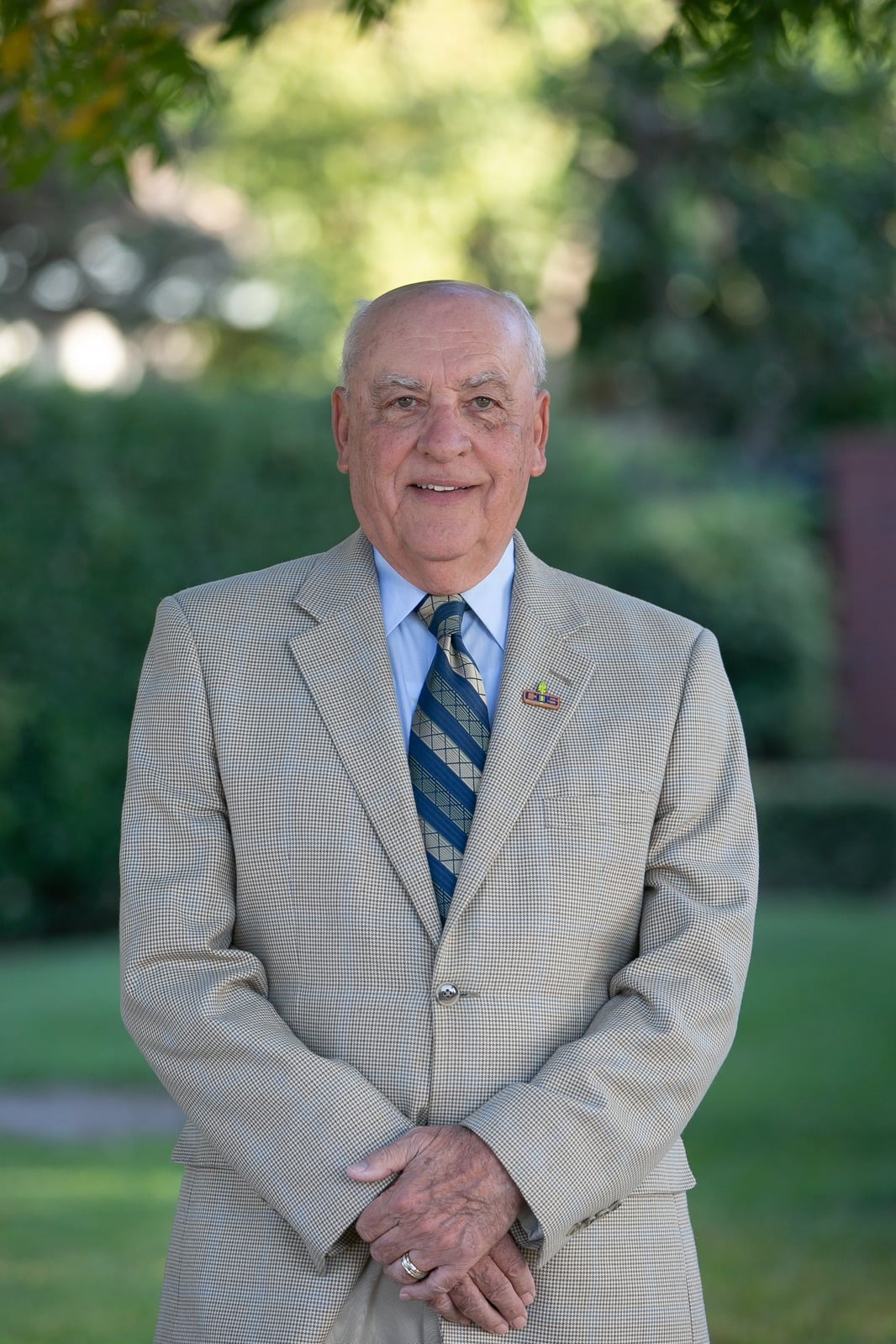
Ken Nunes is the incumbent for the Ward 2 race. He was first elected in 2010 and is seeking his fifth term on the COS Board of Trustees. He has served on the COS Giant Foundation and, with Gerald Benton, former superintendent of Tulare Joint Union High School District, co-chaired the Measure J campaign that funded the Tulare center. Nunes, a certified public accountant, has worked at the same accounting firm since 1974. He brings that financial expertise to a board that, since the recession, has rebuilt the college’s reserves, retired debt, broken ground on multiple construction projects and kept salaries competitive.
“I’ve been around COS for a long time, and I have a passion for it. I’m not just a one-issue person. I see the whole picture,” Nunes said.
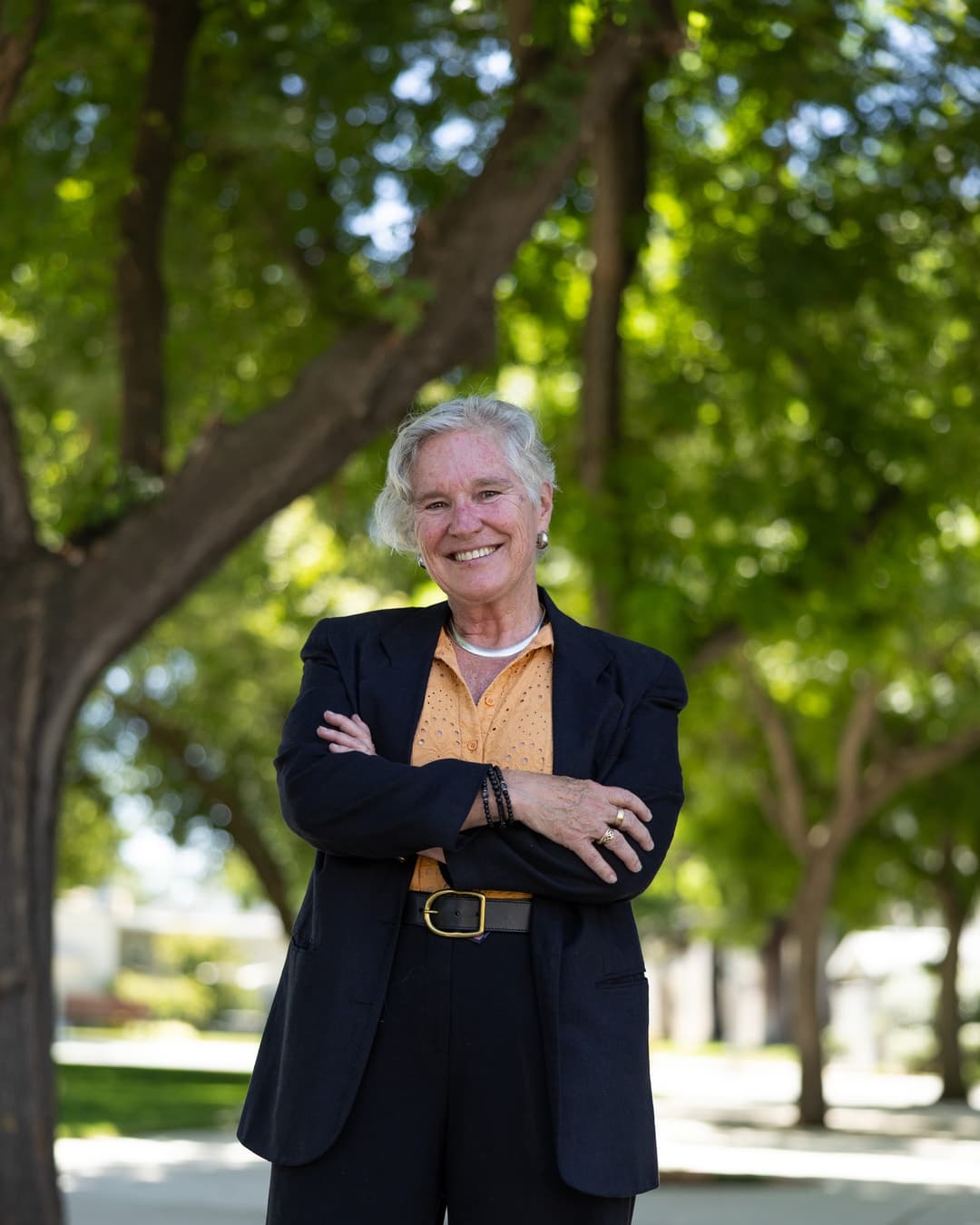
Kristina Roper is the challenger for the Ward 2 race. She’s an archaeologist with an anthropology degree from UC Berkeley and a cultural resource management master’s from Sonoma State. She worked for the National Park Service at Yosemite and at Sequoia and Kings Canyon, then went into private practice. From 1995 she taught at Fresno State, Fresno City College, Merced College and, for one semester, a COS class broadcast at Fresno State. She eventually taught full time at Fresno State, where she was an early online instructor, and ran a field school for her last 10 years before retiring in the spring of 2025.
“Stewardship means leaving something better than how you found it. And that’s how I live my life,” Roper said.
Ward 2: Why Are They Running?
For Nunes, running for the Ward 2 seat means finishing a project he helped start: the new $50 million University Center under construction at COS. Nunes was on the board when President Brent Calvin first proposed the plan to the trustees. He believes giving local students the chance to earn a four-year degree from Fresno State without leaving the area is a once-in-a-lifetime opportunity that he wants to see come to fruition.
“This project is dear to my heart… I’d like to kind of see that come to fruition. That’s kind of my goal,” Nunes explained.
Roper is running on building up COS’s existing trade and certificate programs. From her own teaching experience, she has learned that students’ goals do not always align with a four-year degree. She wants to use her connections with the state and national parks to start a relationship where students can have an entry into employment after completing their programs. She also intends to bring her academic experience to the board. According to Roper, the COS Board of Trustees has never had an academic among its members, with the possible exception of Aguilar.
“They’ve never had an academic on their board,” Roper said. “And I find that perplexing.”
Ward 2: Childcare and Flock Cameras
The Ward 2 candidates were split on the possibility of bringing back an on-site childcare center at COS.
Roper was clear that she would bring back a childcare center. She rejected the idea of simply handing student parents funds and leaving them to figure out childcare on their own.
“I would bring back the childcare center,” Roper said. “We have to have a formal childcare center… for families, people who work, they need that service because it hinders their ability to take classes and to grow.”
Nunes, on the other hand, believes the options currently available to student parents may serve them better than a center on campus. He pointed to a presentation given by COS financial aid staff at the board’s Oct. 12 meeting on childcare options, including Pell grants, work-study and CalWORKs. According to Nunes, the college’s previous childcare center went away “for various reasons, one of which was facility-related.”
“What we found out was that some of these options may be much better than doing childcare on campus,” Nunes said.
Nunes used the example of a student commuting from Farmersville. He explained that a center’s hours may not line up with a student’s schedule, and that care closer to home can be more practical for families.
“It’s much more meaningful if funds are available for that student to have the child being cared for in their local community, where a parent or a grandparent can pick up the child,” he said. “It’s a hot button issue that some folks are raising, but… you have to know what is currently available.”
The candidates were further apart on the Flock cameras on campus. Roper wants them gone.
“I want to see that contract canceled and the Flock cameras removed,” Roper said. “Do we really need to be surveilled 24 hours a day, and that information is then sold?”
Roper also dismissed the argument that the cameras are a matter of campus safety.
“People who argue it’s a safety issue, I think that’s weak. It’s surveillance and it’s profit,” she said.
Unlike the Ward 1 candidates, Nunes did not take a position on the cameras. He said he was not familiar enough with the issue to speak on it, but that he values privacy.
“I’m not well informed on that and haven’t heard much consternation about it,” Nunes said. “I’m all in favor of privacy and not intruding on people’s rights, of course.”
Ward 2: COS Budget and Health Care for Part-Time Faculty
Nunes, a longtime CPA, believes COS’s budget is on the right track. He recalled the college’s financial struggles around 2010, when reserves were low.
“It was a struggle to meet payroll on a monthly basis because we just didn’t have the funds in place to kind of weather the storm,” Nunes said.
Since then, according to Nunes, COS has managed to run surpluses and set money aside for facilities. He gave the example of a new science building at the Hanford campus, a roughly $65 million project. The state approved the project, but COS had to provide 25% of the cost from its own funds to qualify.
“That’s what the budget has allowed us to do: to qualify for projects like that,” he said.
Roper said she still needs to learn more about the budget before proposing changes. She did, however, take issue with how the current board operates.
“I’m not a yes person, and it seems like the current board is very much an old boys club. They say yes to what Brent says,” Roper said. “Except for Connie.” Roper was referring to Ward 4 Trustee Connie Diaz
Like the Ward 1 candidates, the Ward 2 candidates differed on whether COS should participate in the state program that reimburses districts for part-time faculty health insurance.
For Roper, the answer was simple.
“Absolutely. The state is offering it,” she said.
Roper dismissed concerns about the state ending the program in the future. She believes the college should take advantage of the program while it exists.
“If that changes, then we address that then. But meanwhile, they’re paying for it and we’re denying our staff and faculty,” Roper said. “Health care is a human right. It really is.”
Nunes said he is open to the discussion, though he acknowledged that cost is a real factor. He noted that in the private sector, most companies do not offer health insurance to employees who work fewer than 20 hours a week. He also recognized that the public sector is different.
“It’s a dollar issue for sure,” Nunes said. “I’m certainly open to having those discussions… I certainly don’t rule it out.”
When asked about Roper’s argument that the benefit would simply end if the state funding ends, Nunes said the issue is not that black and white. According to Nunes, part-time faculty health insurance was discussed during the last round of contract negotiations. He said the parties could not agree on contract language about what would happen if the state stopped funding the program. He expects the issue to come up again during the next round of negotiations.
“The bridge that we couldn’t cross was that language in itself,” Nunes said, adding, “I could be totally wrong on that.”
Ward 2: Evaluating the COS President and Student Success
The board’s most direct power is over its only employee: the superintendent/president, Brent Calvin. Trustees hire, evaluate and can dismiss the president.
When asked how he would evaluate Calvin and measure his success, Nunes referred to his long history on the board and his experience with previous presidents like Stan Carrizosa. He credits Calvin with leading COS through the pandemic and reaching record enrollment at a time when most colleges were struggling to recover. He also highlighted Calvin’s push for a bond measure in the Visalia-area school facilities improvement district (SFID) to fund the University Center and a new student union, an idea Nunes admitted he thought was “crazy” when Calvin first proposed it.
“That’s, I think, how you measure the work that people do: the ability to lead and go out and get something done,” he said.
Roper’s response focused less on evaluating the president and more on gathering accurate student and faculty data on happiness and performance. She referenced Ward 5 incumbent John Lehn’s statements on the college’s student success rate and questioned how that data is gathered. She said the college never asks students who leave why they left, and that only the students who succeed get mentioned, which she says makes the success rate “not based in reality.”
“They’re not asking all the right people,” Roper explained. “And so we have to identify what’s wrong as well as what’s right, and build on what’s right and fix what’s wrong.”
Ward 2: Keeping Grads in the Valley
When asked how COS can encourage graduates and transfer students to stay in or return to the valley and give back to their community, the Ward 2 candidates had different approaches.
Nunes admitted that the share of COS students who transfer after earning an AA degree is not as high as at some other community colleges in the state, but he believes the University Center will have a positive impact on those numbers. According to Nunes, the opportunity to earn a four-year degree locally will help more students continue their education while staying in the valley.
“If they get their AA degree here, they walk across the street, get their bachelor’s degree,” he said.
Roper, on the other hand, believes COS should address the issue through diversification, by offering more training and programs that lead to well-paying local jobs. Drawing on her background as an anthropologist, she criticized the federal administration’s opposition to DEI and argued that just as species depend on genetic diversity to survive, COS needs to diversify beyond what it currently offers to not only survive a changing world, but thrive in it.
“This is a win-win. Keep people in the valley, keep the talent in the valley. They don’t have to go away to find a job, a career,” she said.