

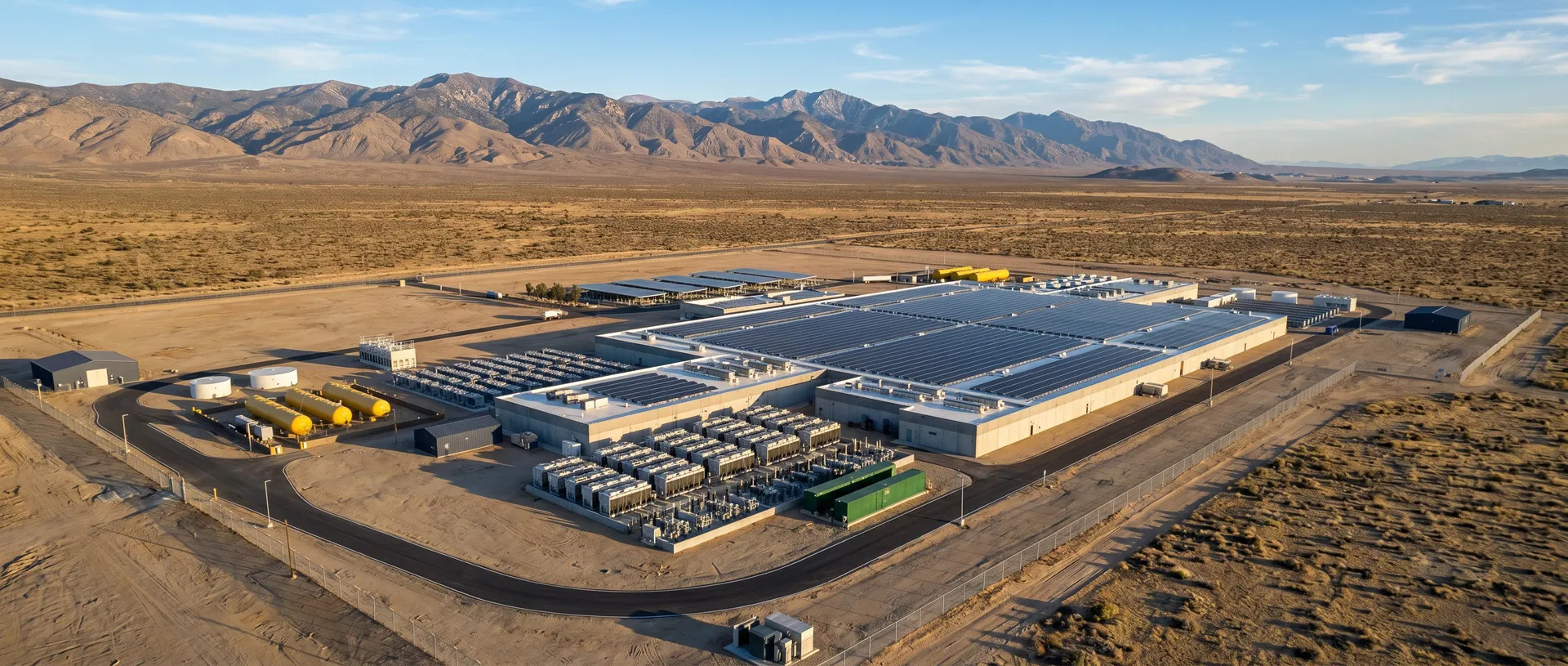
A pair of local agencies – the Tulare County Board of Supervisors and the Hanford City Council – hit the brakes on data center construction in their jurisdictions this week. Their actions come on the heels of widespread opposition to a plan to place the centers on county fairgrounds around the state, including in Kings and Tulare counties.
Temporary Data Center Moratorium in Tulare County
In Tulare County, the supervisors voted 4-1 to place a 45-day moratorium on data center construction. The ban could be extended up to two years while planners evaluate the environmental and social impacts. Michael Washam, associate director of the county’s Resource Management Agency, said the county’s current zoning ordinances predate data centers and are likely inadequate to oversee their safe construction and operation.
“Existing zoning ordinances, including Tulare County’s, were developed before these facilities became commonplace and therefore do not specifically address the unique operational characteristics of these types of facilities,” he said. “So without updating regulations, applications could be processed using standards that were never intended for this type of development.”
During Tuesday’s meeting of supervisors, Washam described how data centers differ from other industries and why the county needs time to evaluate their impacts, especially the consumption of resources.
“These differ significantly from traditional commercial industrial development,” Washam said. “Large-scale data centers require significant electrical capacity, significant water resources for cooling systems, extensive backup power generation, large building footprints, specialized utility infrastructure and around-the-clock operations.”
The county has not received formal applications to build data centers or similar facilities, but there is interest in them, Washam said. The county, he added, had to act before an application was filed to prevent it being evaluated using outdated regulations. The temporary moratorium will allow the county to adequately evaluate technical aspects of data center construction.
He also stressed that the moratorium does not mean the county is for or against construction of data centers.
“Rather, it’s about ensuring that the county has adequate time to evaluate and thoughtfully consider this emerging form of development and establish appropriate regulations before projects are submitted under our existing ordinance code,” Washam said. “The proposed interim ordinance is intended to preserve the status quo.”
Residents Fear Noise, Pollution, Higher Utility Bills
The supervisors’ decision was not unanimous. Vice chair Dennis Townsend voted against the temporary moratorium. Townsend wanted a “softer” approach to data centers while staff takes stock of their possible impacts. Further, the county hasn’t defined what a data center is, he said.
Instead of a blanket temporary ban, Townsend urged the board to consider any proposal on a case-by-case basis. That, he said, would allow debate among supervisors and give members of the public an opportunity to comment.
“So maybe if we just say, ‘Hey, if it comes up during the moratorium period, we will immediately put that on the agenda, agendize it and take a position,’” he said. “Not that it’ll be an opposed position, but we will debate that position, take public comment, the whole thing on each one.”
Mariela Loera, a policy advocate for the Leadership Council for Justice and Accountability, took strong opposition to the construction of data centers anywhere in the San Joaquin Valley. Data centers use of resources, she said, will impact low-income communities that are already under pressure.
“These communities already experience significant environmental and social inequities, including limited access to clean drinking water, unreliable electricity service, and poor air quality, all of which will further be strained with the development of data centers,” Loera said. “We also urge the board to go beyond simply regulating these facilities and instead do an analysis of whether data centers make sense at all in the region.”
Porterville resident Faith Ortiz urged the board to consider the actual impacts of data centers on the communities where they have already been built.
“If data centers are permitted in Tulare County, there will be price hikes on utilities, poor water pressure, contaminated, discolored water that will lead to no water, and constant noise pollution radiating from data centers,” she said. “This is not a small possibility. This is not a what-if. It is what’s happening in areas where data centers have been permitted despite public outcry and lawsuits.”
No Data Centers for Hanford
Meanwhile in Hanford, as the city’s zoning ordinances stand today, data centers and edge computing centers are not permitted inside the city limits. At its Tuesday night meeting, the city council declined to consider changing the local zoning regulations. By opting not to include data centers as permissible land use in Hanford, the council effectively banned construction of the centers there.
So for now, data centers cannot be approved in Hanford no matter the circumstances, said assistant city manager Jason Waters. City zoning regulations don’t allow them.
“What that means is that the code doesn’t have any specific language about allowing these types of uses. In those cases, it defaults to them not being allowed. They’re not specific uses that are called out that are allowed in the city limits,” Waters said. “If we were to receive a proposal for a data center that came directly to the city, our comment back would be these are currently not allowed under Hanford Municipal Code.”
However, federal and state agencies that own land inside Hanford’s city limits might not be bound by local zoning laws. Agencies carrying out government functions have been granted blanket land-use jurisdiction that can override local control in certain cases. Should that occur, Hanford City Hall would at least have input as a project is subjected to the state’s rigorous laws on environmental protection. Waters said the city would remain in the loop, though it would have little input.
“Even though it may not require city approval, we would expect them to coordinate with us, because there may be utilities coordination, environmental coordination, that type of thing,” he said.
If Hanford does change its zoning ordinances to allow data centers, it would give city hall much greater influence, according to Waters.
“If this were a private development within the city limits, zoning regulation and development standards would apply,” he said. “We would act as the lead responsible agency, so we would be in charge of the environmental documents in that case, and the city would directly review and act on required applications.”