

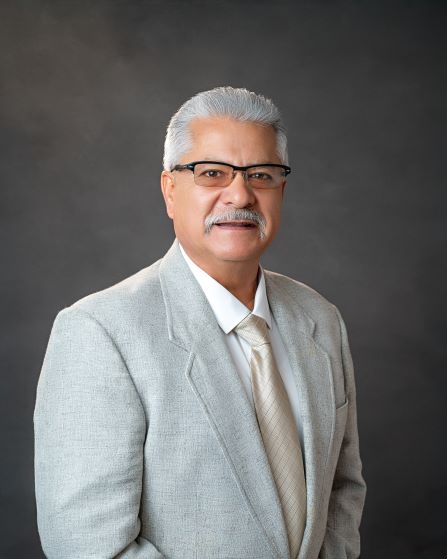
Rivas was elected in November 2024 to represent District 3.
“Every elected official and public employee who makes or influences governmental decisions is required to submit a Statement of Economic Interest, also known as the Form 700,” the FPPC’s website states.
Elected officials list their economic interests such as real estate in Schedule B on the 700 Form.
FPPC rules state that elected officials “must report interests in real property located in your agency’s jurisdiction in which you, your spouse or registered domestic partner, or your dependent children had a direct, indirect, or beneficial interest totaling $2,000 or more any time during the reporting period. Real property is also considered to be ‘within the jurisdiction’ of a local government agency if the property or any part of it is located within two miles outside the boundaries of the jurisdiction.”
Rivas owns a home in Porterville on San Lucia — and 1.45 miles from the boundary of District 3 — worth approximately $330,000.
Rivas declared under penalty of perjury on his form 700 that he had no economic interest in District 3 or within 2 miles of District 3. But his wife, friends, business associates and property records all confirm he does own the house in District 2.
Even after being made aware that he had to disclose his home to the FPPC, Rivas did not amend his Form 700.
At the December 16 Porterville City Council meeting, Neeley gave Rivas a packet that instructed how he could amend his 700 form.
“That’s a Form 700 packet. You are required on Schedule B to list your property on San Lucia. It’s not listed,” Neeley said.
“I am giving you 15 days to amend that. If in 15 days I don’t see an amended one posted I am filing a complaint with the FPPC. It is probably going to cost you $5000 and your seat.”
Cole Smith, an investigator for the FPPC, said Rivas was informed of the complaint five days after their office received it and that the complaint was still under review.
He stated the penalty for perjury on Form 700 can range from $5000 per offense to just a warning, depending on the violation and prior offenses.
Rivas neglected to list his house on two Form 700s for 2024 and 2025, but Smith was not clear if that counted as two violations.
Rivas’ possible justification for not declaring his house might stem from the fact that elected officials are not required to declare their personal residences. The FPPC website states officials are not required to report “a residence, such as a home or vacation cabin, used exclusively as a personal residence.”
Greg Shelton, a close associate of Rivas, called the Valley Voice last December and said Rivas did in fact live with his wife on San Lucia Ave in District 2.
The Voice reached out to Rivas by phone and email but he did not respond.
According to the California code 36502, an elected official that does not live in the city limits or the district one represents during the term causes an immediate vacancy of their seat.
The Voice reached out to the Tulare County Districts Attorney’s office to inquire if they were investigating allegations that Rivas was not truthful in stating his residence in order to run for a district 3, which is a crime.
“As is our longstanding policy, we do not discuss whether an investigation is proceeding or not. Often, matters of election integrity are handled by the Secretary of State or the Fair Political Practices Commission, which then refers to the California Attorney General,” Stuart Anderson, Communication Director for the Tulare County District Attorney’s Office, said.
But if Rivas did mislead officials about his residential address, he may have found a loophole in the system. The Secretary of State and FPPC do not have an investigative arm to check if candidates or elected officials live where they say they do.
Michelle Baldwin from the Tulare County Registrar of voters said her office checks to see if the candidate is registered in the district in which they are running, but that they don’t have the resources to confirm if the candidate actually lives where they say they do.
Baldwin said it’s based on the honor system.
“We have to trust that the candidate is telling the truth.”