

Democratic leaders want voters to approve an unprecedented off-calendar change in the state’s congressional district boundaries this November to favor their party, and the possibility has local leaders firmly divided on the nakedly partisan move.
Tilting a Tilted Playing Field
Already, legislatures in Texas and Missouri have remapped their congressional districts to weigh them in favor of the GOP. The Florida legislature is also in the process of a midterm remapping to favor Republicans. Ohio, too, is redrawing its maps before 2026 midterm elections to comply with that state’s constitutional requirement for bipartisan agreement.
Lawsuits regarding congressional redistricting are also multiplying. Alabama, Connecticut, Florida, Georgia, Louisiana, Missouri, North Carolina, Texas, Utah and Wisconsin all have ongoing litigation regarding congressional redistricting.
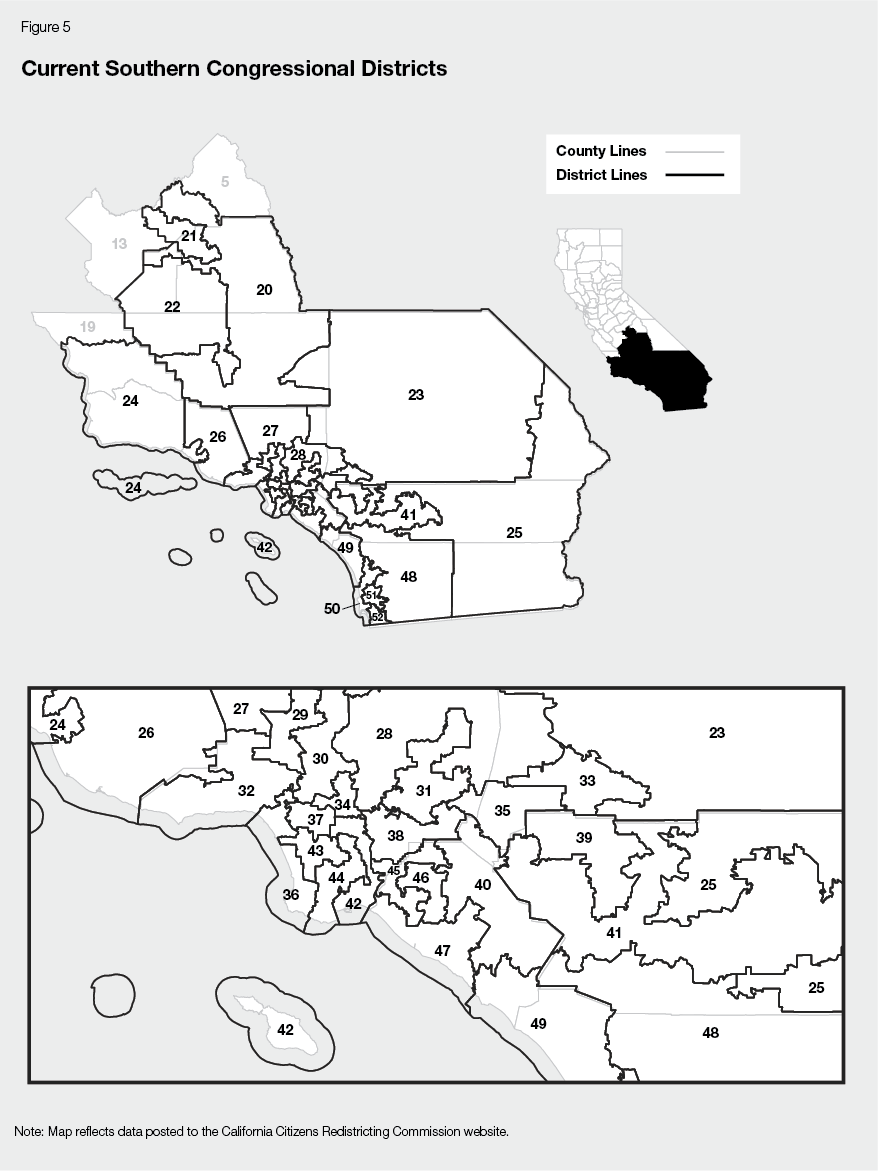
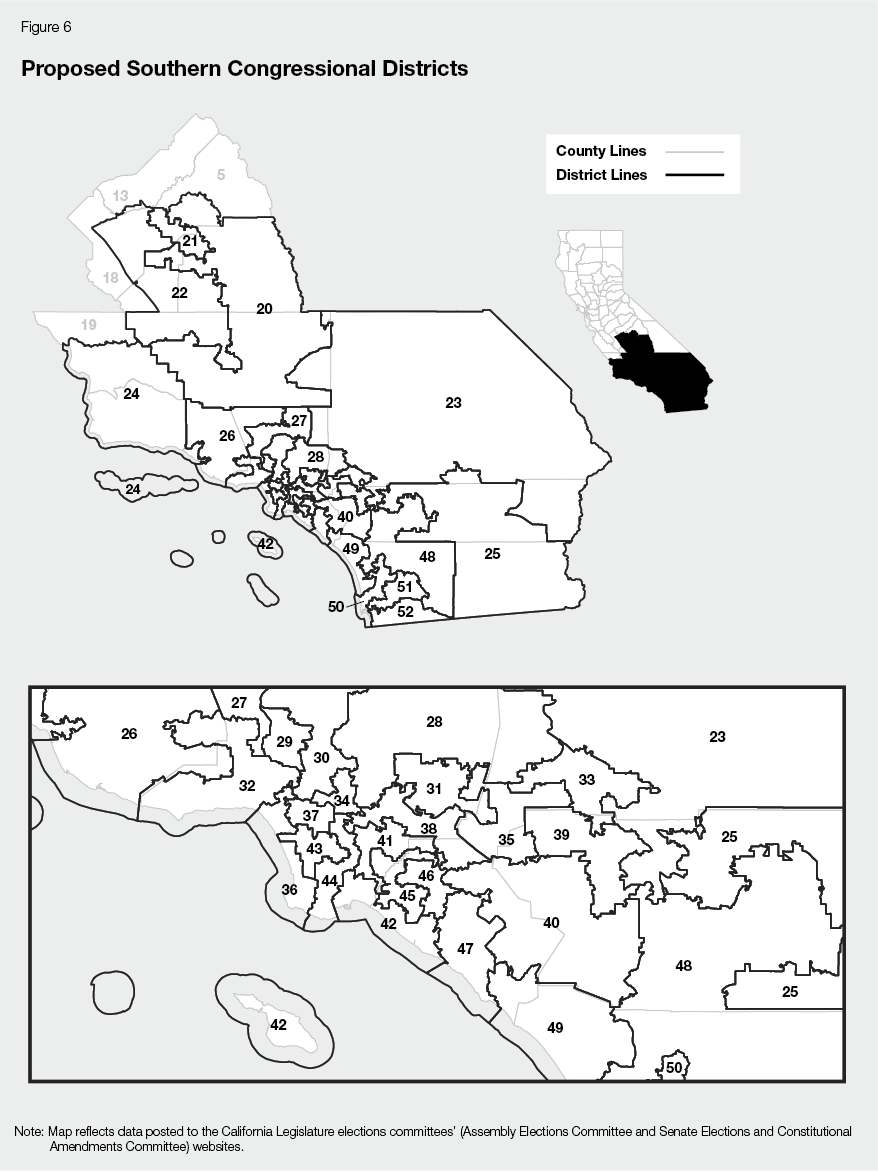
In California, Prop 50 gerrymanders the current nonpartisan maps and keeps the partisan map in place until the next Census in 2030. The Prop 50 map complies with federal requirements, but not with the strict fairness required of the Citizens Redistricting Committee. Prop 50 also calls on Congress to create “fair, independent, and nonpartisan redistricting commissions” in every state to avoid future partisan battles.
Prop 50 alters the state constitution, and the Legislative Analyst’s Office estimates the cost to the state at $200,000. But the change could cost individual counties millions.
Prop 50 goes before voters during a special election on Tuesday, November 4.
State Chamber of Commerce Takes a Neutral Stance
Instead, they leave individual voters to make their own choice on this hot-potato issue.
“We trust California voters to decide if Proposition 50 is in their interest and urge all voters to be informed and make their voices heard,” said Board President Maryam Brown in a statement.
The Los Angeles Area Chamber of Commerce, however, is supporting the initiative. In line with other supporters, the LA Chamber’s leadership believes a greater federal presence would give California commerce a boost.
“As the nation’s gateway to global trade and the world’s fourth-largest economy, our businesses need stable, accountable, and competitive federal policies to thrive,” said a statement from Maria S. Salinas, the group’s president and CEO. “Proposition 50 helps ensure California businesses are not disadvantaged in federal policy debates, [while] safeguarding critical investments in housing, healthcare, transportation, and disaster relief.”
Locally, the Tulare Chamber of Commerce has yet to take a position on Prop 50, said CEO Donnette Silva Carter. Its board, she said, will discuss the matter formally at its upcoming meeting.
Local Political Leaders Uneasy Over Prop 50
For Visalia City Council member Emmauel Soto, a Democrat, the change Prop 50 would bring makes sense in maintaining a balance of power at the federal level. But he’s not sure about the timing.
“It’s definitely premature, but when you look at the dynamics going on around you, you can see why it’s being done,” he said. “You don’t want to go to this level, but I think you have to when other states are doing it.”
Yet he’s not sure there’s time to delay in making this countermove. The Democratic Party has to engage effectively, he said, and the party’s leaders and members recognize a need to exert their influence sooner than later.
“If you look at all the special elections going on around the country, you see the trend. I think they know that,” Soto said. “They got straight to work in other states. I think sometimes you have to fight fire with fire.”
He also noted that California’s Democrats are handling the situation more openly by asking voters for their approval.
“When you see what’s going on across the country in other states and folks not even getting to vote on it,” Soto said. “It makes you feel a little better to have the folks have a choice.”
However, the change Democrats want cannot be accomplished with voter approval, as it was elsewhere.
County Supervisor Larry Micari, a Republican, is strongly against Prop 50, citing the state Citizens Redistricting Committee’s unusually fair and transparent congressional mapping process. The current map was created in 2021.
“I’m not supportive of it at all,” Micari said. “The law is in place. We just went through the process. We got praised for transparency.”
Citizens Redistricting Committee chair Jeanne Raya, a Democrat, agrees with Micari.
“As a registered Democrat, I would celebrate replacing members of Congress who have forgotten their oath to serve constituents and protect the Constitution,” she said in an opinion piece for CalMatters.org. “But it can’t be at the expense of California’s Constitution, nor its voters who mandated fair, nonpartisan redistricting.”
Is the Districting Process Broken?
For Soto, Prop 50 is a distasteful but needed move to check Republican power. Yet he’d rather the issue could be avoided.
“Am I 100 percent? I’d say I’m very close. I do think it’s premature. I wish we didn’t have to do this,” he said.
While Soto said he supports the move now, it would not have been his preferred approach.
“I’m not one to come out and say this is what we should have done,” he said. “But when you look at the data and trends from special elections, you’re going to see a swing in one or two of the houses. I know our president is trying to minimize that swing. If this is going to offset this, I’m for it.”
Micari, on the other hand, doesn’t see the need for Prop 50.
“I can see it if there were a problem, but we’ve got a process in place,” he said. “If something is broken and there’s a problem, yeah, but it’s not broken.”
He also sees it as a waste of money that could be spent elsewhere to bolster unfunding programs already in place.
“It’s state money they don’t have. It’s just ridiculous,” he said. “It’s a waste of taxpayer money. There are a lot of programs that are in jeopardy.”
Soto doesn’t think it will fix the balance of power, and he’s not willing to tell voters what they should do.
“Even with California doing this, I still think it’s going to be unfair. I don’t think this is something anyone wants to see or have to pay for,” he said. “I don’t think it’s up to me to tell people how to vote. You hope they do their own research, come to a good conclusion, and go and vote.”